%20jpg.jpg)
Why “Open Capacity” Matters More Than Price When Choosing a Co-Man
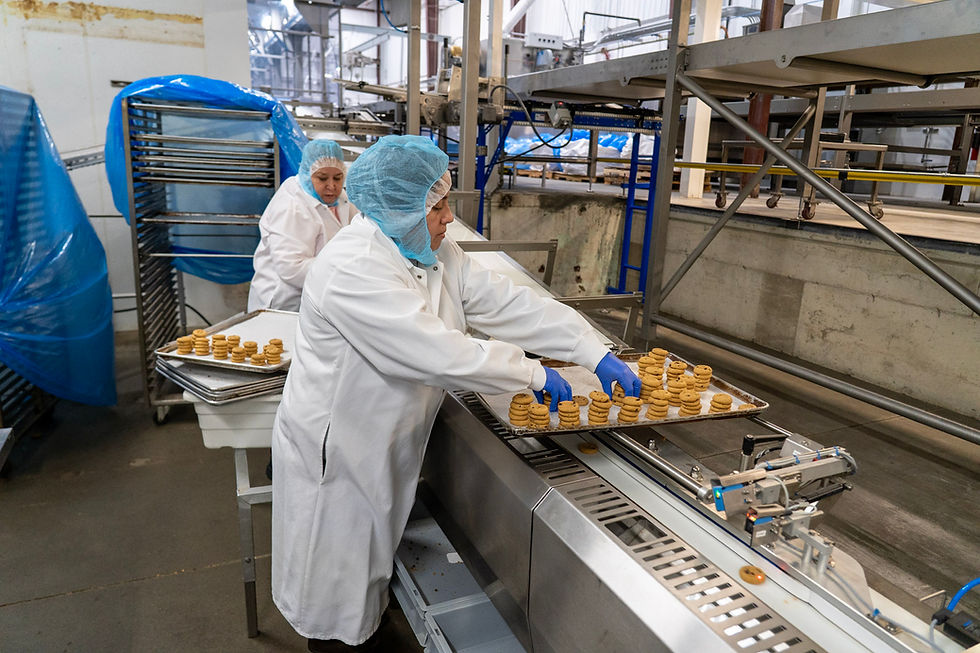
When brands begin evaluating a contract food manufacturer, the first comparison is usually cost per unit.
At early stages, that makes sense. Volumes are smaller, production runs are simpler, and the primary goal is getting product to market.
But as soon as a brand expands into retail, adds SKUs, or begins planning for growth, the decision framework changes. Production is no longer just about cost. Instead, it becomes about reliability, timing, and the ability to scale without disruption.
This is where many brands run into problems. The lowest-cost co-manufacturer often cannot support what the business actually needs operationally.
Because in practice, production capacity — not price — determines whether your brand can execute.
What Open Capacity Really Means in Contract Food Manufacturing
Open capacity is often described in simple terms: available space, open lines, or unused equipment. In production, it’s much more nuanced.
For capacity to be meaningful, it has to be usable within the constraints of real production. That means having available line time that isn’t already committed, labor that can support additional runs without creating bottlenecks, and packaging lines that can handle different formats without disrupting existing schedules.
It also means having flexibility in how production is planned.
A co-manufacturer may have the technical capability to produce your product, but if their schedule is fully booked or their operation is optimized for fixed, repeat runs, that capacity doesn’t translate into availability. The system is already spoken for.
That distinction between what a facility can do and what it can actually accommodate is where many brands run into issues.
Why Price-First Co-Man Selection Breaks Down at Scale
Pricing is one of the easiest variables to compare when evaluating co-manufacturers. It’s clear, it’s measurable, and it fits neatly into a margin calculation.
But it doesn’t capture how production actually operates over time.
Co-manufacturers that compete primarily on price often run at very high utilization. Their schedules are built to keep lines full, with limited idle time. On paper, this creates efficiency. In reality, it reduces flexibility.
When production is tightly scheduled, even small changes become difficult to manage. Adding a new SKU, increasing volume for a retailer, or adjusting a production window requires reshuffling an already full calendar. That introduces delays, creates pressure on labor and sourcing, and often leads to additional costs that weren’t part of the original quote.
This is where the initial pricing advantage starts to erode.
What looked like a lower-cost option becomes more difficult to operate within — especially as demand becomes less predictable and production requirements become more complex.
What Open Capacity Enables for Growing CPG Brands
Capacity becomes visible when production needs to change. Growth introduces variability — new SKUs, larger orders, tighter timelines.
If line time is available, those changes can be absorbed. If it isn’t, production is already committed, and every adjustment introduces friction.
That’s what separates a co-man that can support growth from one that can only maintain it.
Faster Product Launches
When line time is available, new products can be scheduled without waiting for a gap in production.
That has a direct impact on:
Retail reset timelines
Seasonal launches
Innovation cycles
Instead of aligning product development to production availability, brands can move forward based on market timing.
Scaling Without Changing Co-Mans
As volume increases, many brands are forced to transition to new co-manufacturers because their existing partner can no longer support the required throughput.
That transition introduces risk. Even when processes are well documented, moving production to a new facility can lead to variability in output, differences in execution, and temporary disruption to supply.
Working with a co-manufacturer that has the capacity to grow with you reduces the need for those transitions and helps maintain consistency over time.
Flexibility Across Packaging Formats and Channels
As distribution expands, packaging requirements tend to evolve alongside it. A product that starts in a simple retail format may need to adapt to:
Club store multi-packs
Foodservice bulk formats
E-commerce packaging configurations
Supporting that shift requires both the right equipment and the available capacity to run different formats without disrupting existing production.
ZoRoCo operates across multiple packaging systems — VFF, stand-up pouches, bag-in-box, and single-serve formats — within allergen-free, gluten-free, and frozen environments. That structure allows production to shift based on channel requirements rather than forcing brands into a fixed format.
The Ability to Absorb Demand Variability
Forecasting improves over time, but it’s never perfect.
Retail promotions, seasonal demand, and distribution expansion all introduce variability that needs to be managed in production.
Without available capacity, even small deviations from the forecast require significant adjustment. Production schedules need to be reshuffled, lead times extended, and inventory planning becomes more reactive.
With available capacity, those changes can be absorbed more naturally. Production can be adjusted without cascading impacts across the schedule, and inventory can be managed with more control.
More Predictable Production Costs Over Time
Lower unit cost doesn’t always result in lower total cost. When production is tightly constrained, variability introduces inefficiencies:
Rush labor to meet compressed timelines
Expedited ingredient sourcing
Additional changeovers to accommodate schedule changes
With available capacity, production can be planned more deliberately. Runs can be optimized, changes can be scheduled instead of forced, and costs become more stable over time.
Forecasting plays a direct role in this. The more visibility a co-manufacturer has into future demand, the more effectively production can be aligned to reduce unnecessary cost.
The Hidden Costs That Don’t Show Up in a Quote
The most impactful costs in contract manufacturing are often the ones that aren’t included in initial pricing. These typically show up during execution, not evaluation.
Common examples include:
Expedited ingredient sourcing when timelines shift
Rush production fees to meet retailer deadlines
Inefficiencies from tightly packed production schedules
Missed delivery windows that affect retail relationships
Inventory imbalances from inflexible production timing
Individually, these costs may seem manageable. Over time, they add up and directly impact margins, operational efficiency, and growth.
How to Evaluate a Co-Manufacturer’s Actual Capacity
Capacity isn’t always visible in a proposal or capability deck. It needs to be understood through how the operation actually runs. That starts with asking more specific questions.
On production availability:
How far out is the schedule typically booked?
What portion of capacity is intentionally kept open?
How are competing priorities managed during peak demand?
On scalability:
What happens if volume increases faster than expected?
How are additional SKUs introduced into the schedule?
How are seasonal spikes planned for and absorbed?
On visibility and communication:
What access is provided to production schedules and inventory?
How are updates communicated as production progresses?
Access to real-time data and consistent communication allows brands to make decisions based on current conditions, rather than reacting after issues arise.
How ZoRoCo Approaches Open Capacity
ZoRoCo was structured to support brands beyond initial production runs, with the expectation that requirements will change over time.
That approach is reflected in:
Multiple specialized plants designed for allergen-free, gluten-free, and frozen
Available capacity across production lines and packaging formats
Systems that provide real-time visibility into production, inventory, and reporting
A non-competitive model where no internal brands compete for production resources
Rather than operating at maximum utilization, the focus is on maintaining the flexibility required to support growth, adjust to demand, and execute consistently.
At early stages, pricing may drive the decision. Over time, the ability to produce consistently, adapt to change, and scale without disruption becomes the more critical factor.
The co-manufacturer you choose ultimately defines how your business operates and how far it can grow without introducing unnecessary complexity.
If you’re thinking about how your production will scale — and whether your current setup can support it — we’d love to chat about what that next stage could look like.


